

I.
I did it.
I planted my seed in a human woman and it grew into a human child, a child who will have all of my good qualities and none of my bad, and all of my wife’s best qualities and none of the ones that I find annoying.
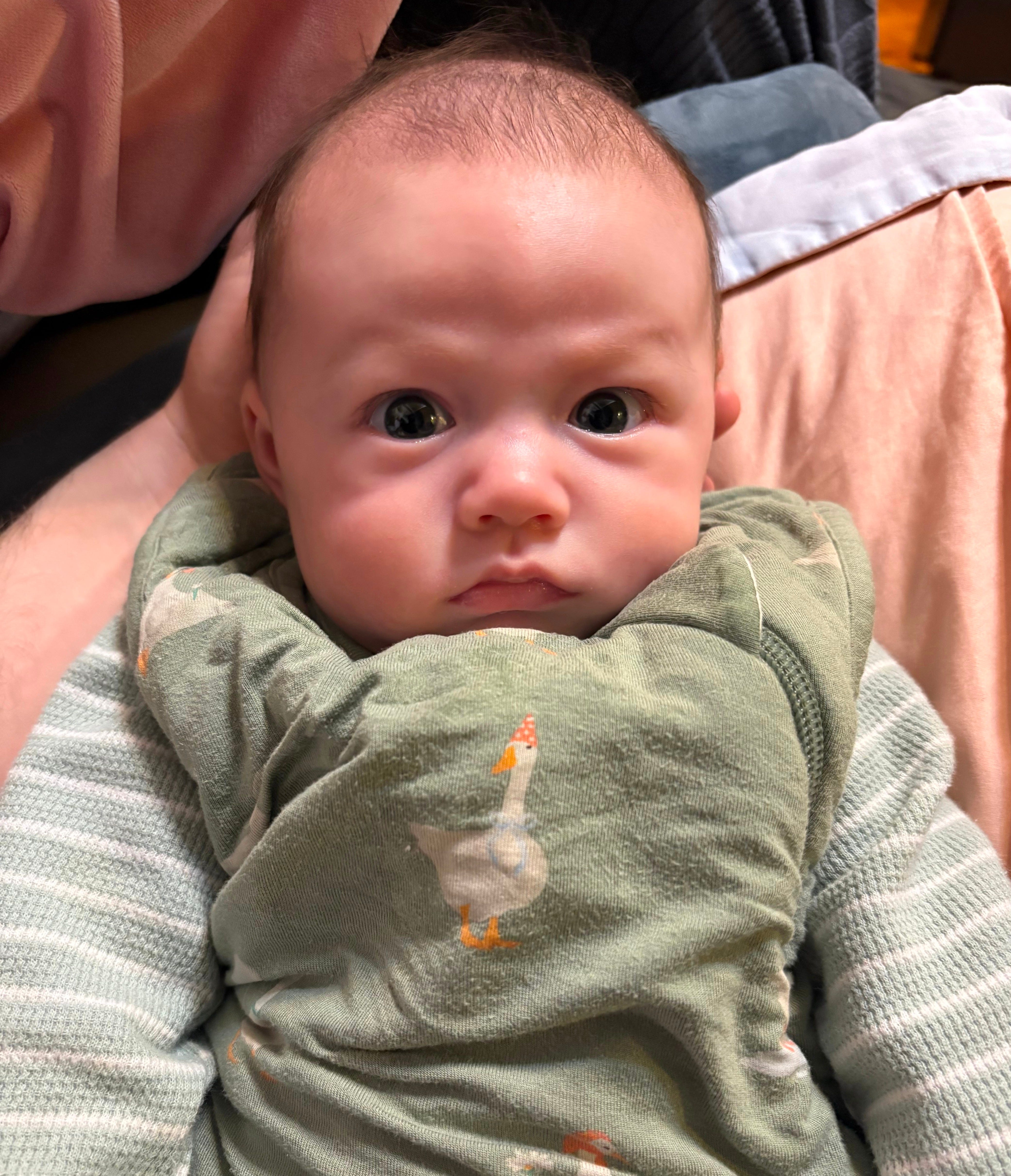
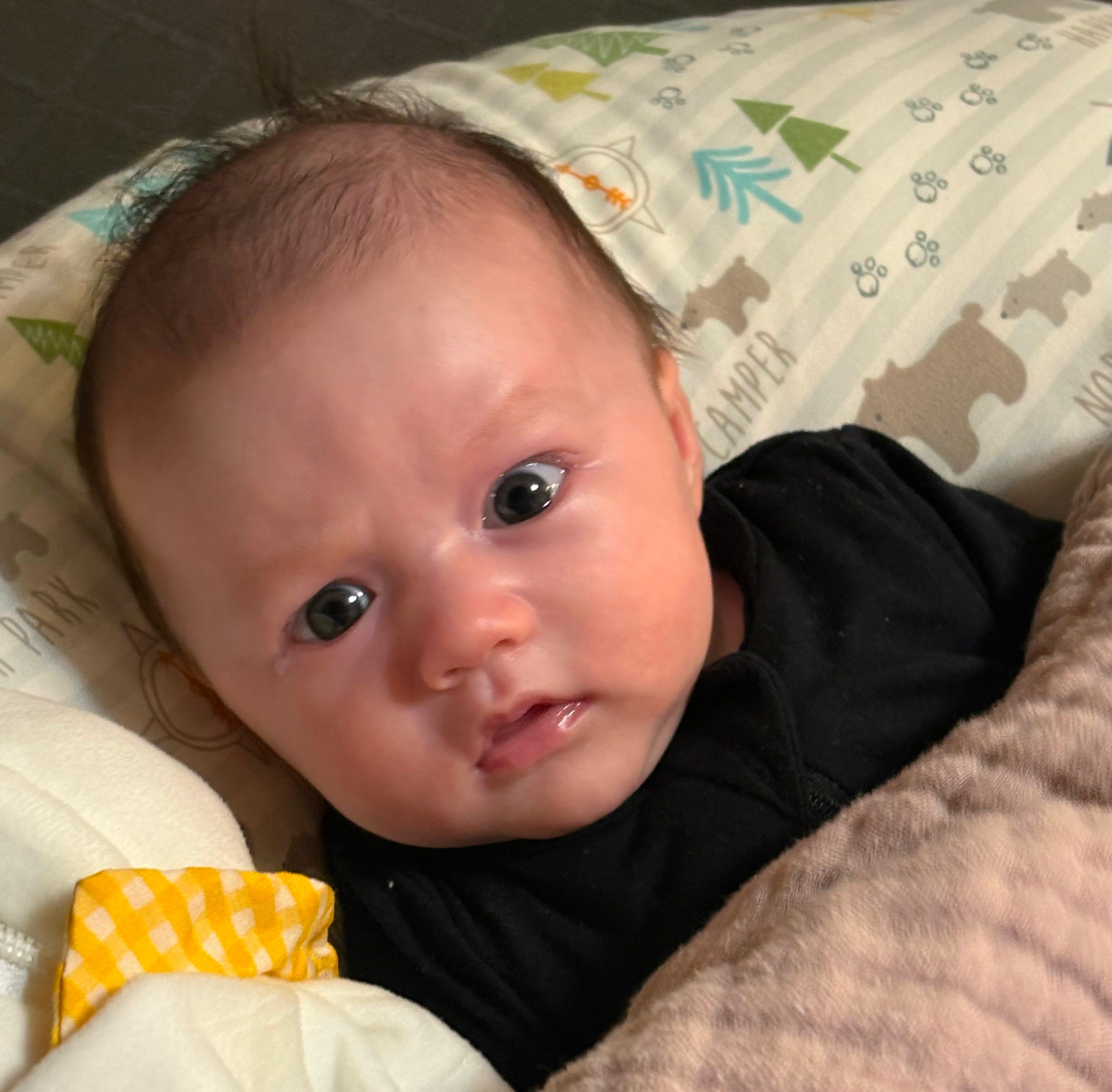
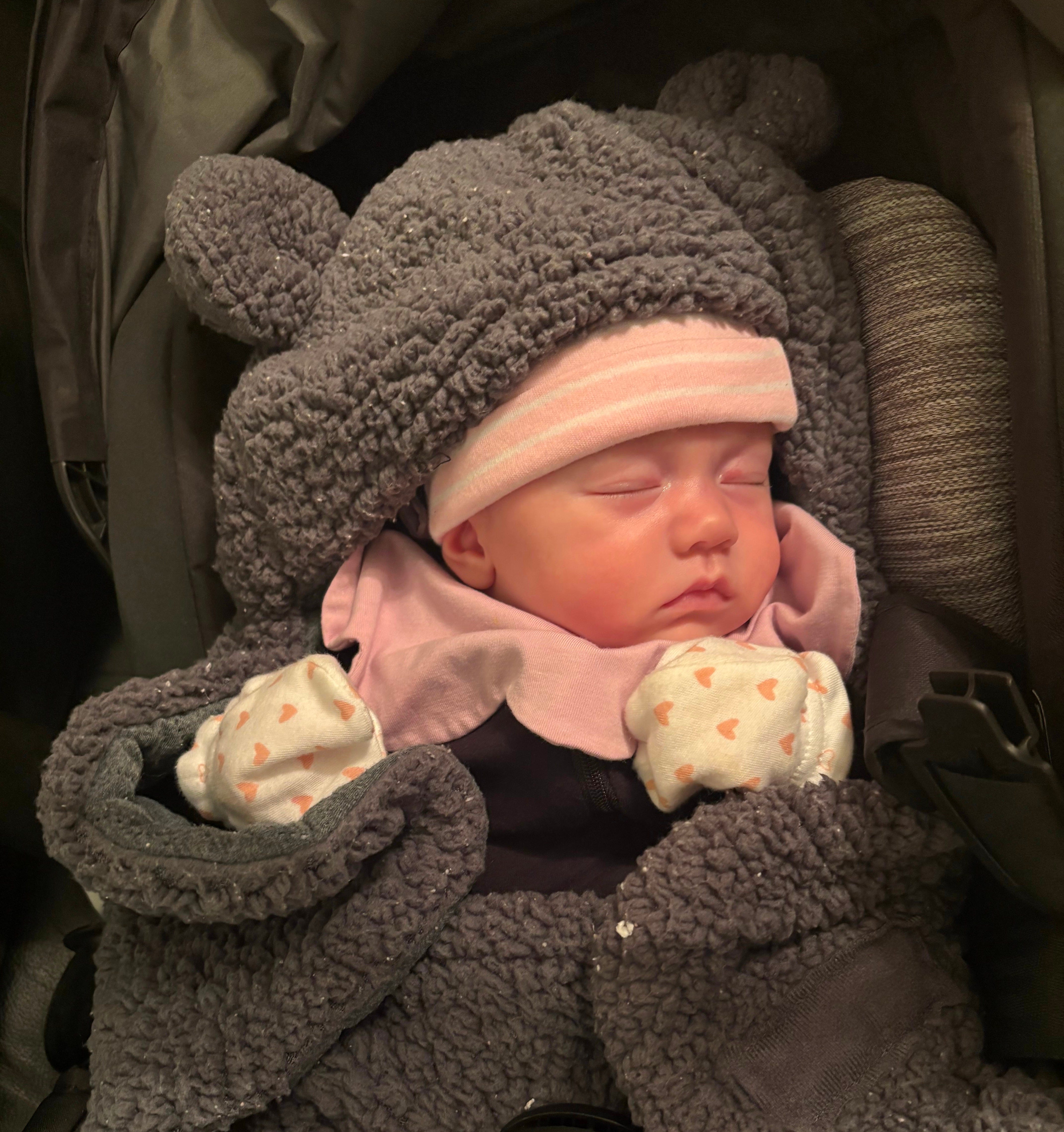
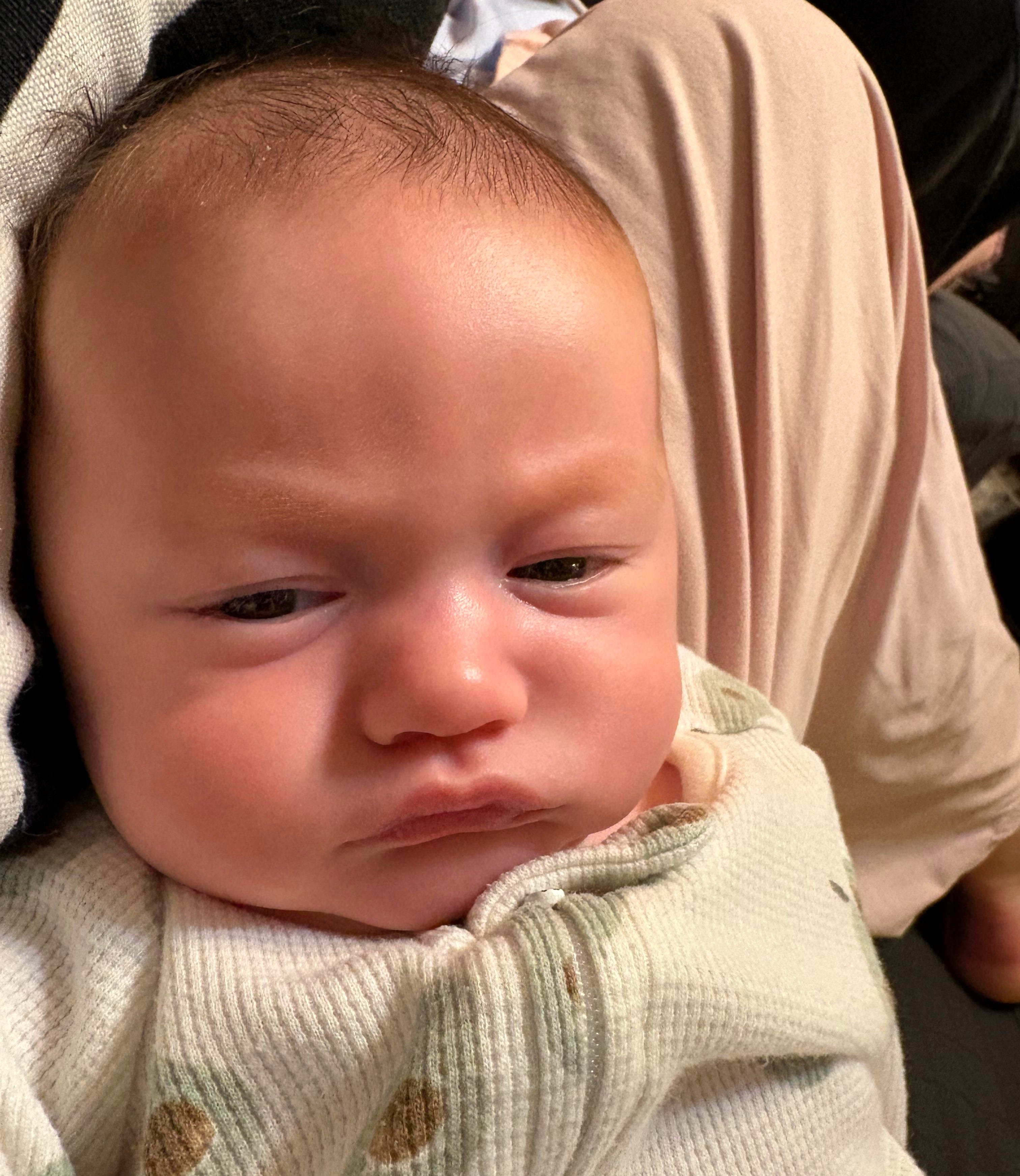
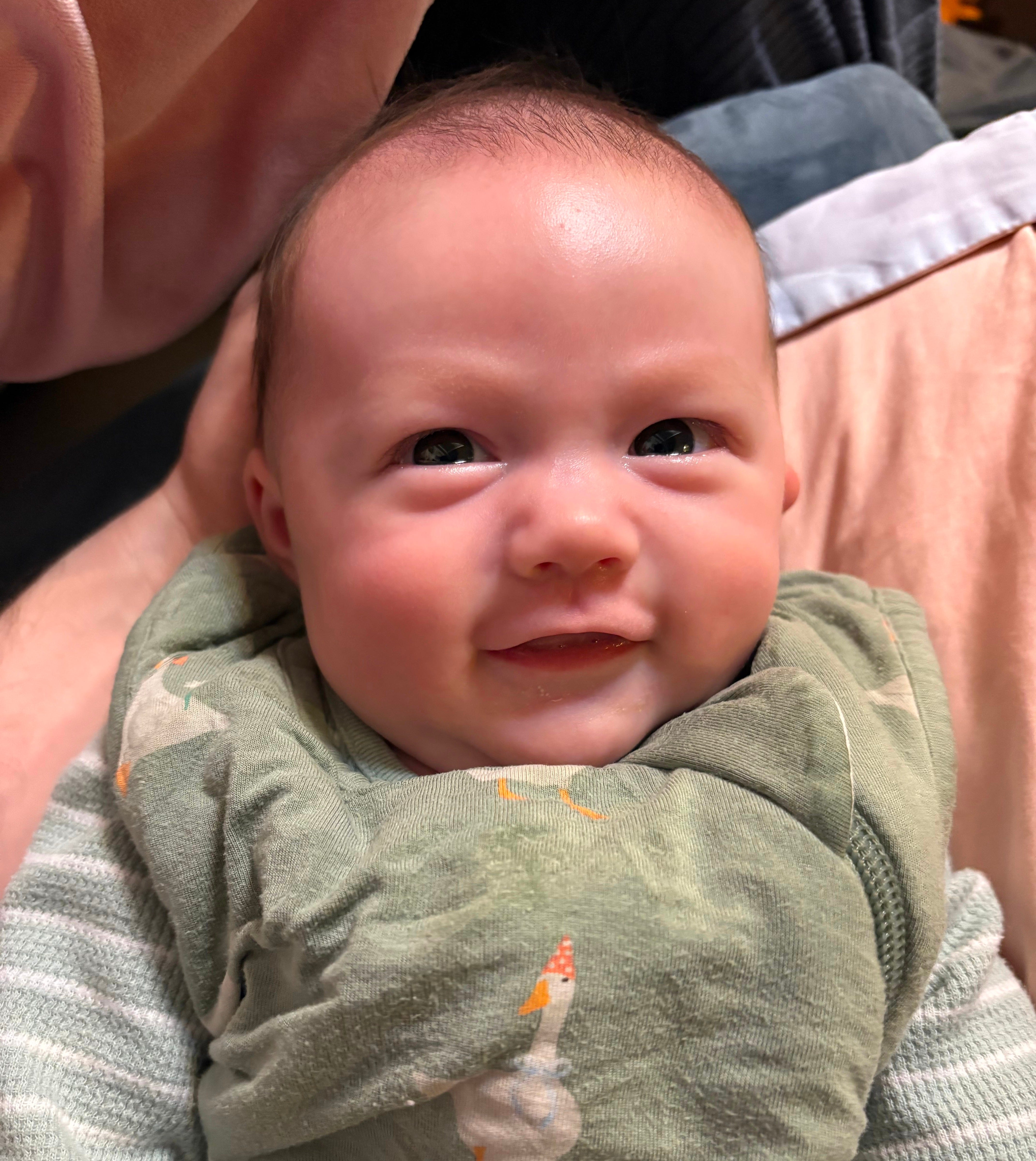
Her name is Jenny.
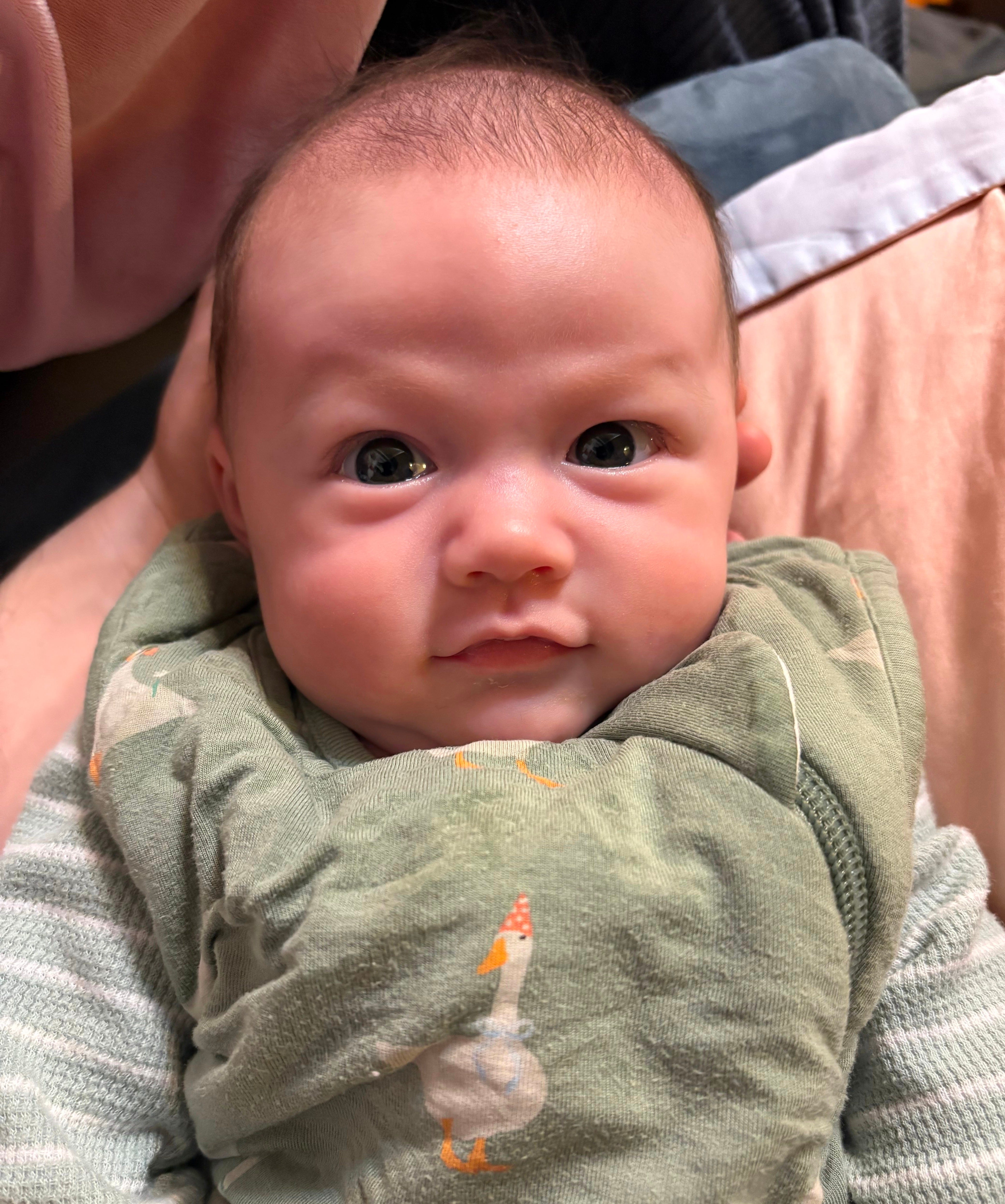
My wife, it must be admitted, did most of the heavy lifting (though my words of encouragement and leg-holding did play a critical, perhaps even pivotal, role in the delivery). But since Jenny’s arrival I have taken the baton from my darling wife and sprinted far ahead of the competition, becoming an early frontrunner for Dad of the Year. The tenderness of my touch, the musical sweetness of my voice, the terrifying rapidity of my diaper changing—it is truly remarkable how I have taken to fatherhood; one might say I was born for this, a natural at nurturing.
II.
Amidst the mucus and the chaos, with the primeval cries of my first-born ringing out through the delivery room, a single thought echoed through my mind:
We are Gods.
The infinite fire that burns within our frail and ever failing form, the wild miracle of our being in this whirling suffering of a world…
How could we not be Gods?
As theurgists were purified and developed a greater capacity to receive the divine light, they would enter a deeper dimension of sacrifice, one revealed in the altar itself. They would realize that their sacrifice of mortal life to the gods had been, all along, an inverse reflection of the gods’ prior sacrifice to the world of generation, specifically the sacrifice of immortality to mortal life. It is then that the theurgist would experience the depth of his paradox: He is the mortal being that offers sacrifices to the gods while, at the same time, he is the god that sacrifices its divinity on the altar of the human body. Through the altar the theurgist offers himself to himself: as man to god and as god to man; he discovers his divinity through his mortality and enters a circulation whose pivotal point of return is the the sacrificial body-altar. (Gregory Shaw)
The sacrifices my wife and I have made, and will make, for our child; the sacrifices made by our forefathers and foremothers: the immigrations made and the dreams deferred, the long hours and the late nights; the love which brought her into this world, and the love that she will bring into it…
How could she not be a God?
III.
Even in the moment I was aware that this epiphany of my child’s divinity had not arisen ex nihilo. Some weeks before I read David Bentley Hart’s You are Gods (2022). The core thesis of the book is basically what the title would imply.
God became human so that humans should become God. Only the God who is always already human can become human. Only a humanity that is always already divine can become God.
God is all that is. Whatever is not God exists as becoming divine, and as such is God in the mode of what is other than God. But God is not “the other” of anything.
While there are a few sections that tend towards fairly accessible secular philosophy, the bulk of the book contains what has to be some of the most arcane and abstruse theology you’ll ever see, real “how many angels can dance on the head of a pin?” type stuff. So, for example, we have this doozy from the final essay (emphases mine).
For Bulgakov, humanity’s spiritual nature is already divine in its very origin; each human being is from the first a created god who exists as a creature only in forever being deified, in an infinite ascent into God. But he also—in a formulation that seems calculated to offend against logic and piety alike, but that cannot fail to be in some sense true if there really are such things as spiritual creatures—speaks of human beings as participating in their own origination from nothingness. The spiritual “I” in being created, is an I who has been asked to consent to its creation. And only by this primordial assent does humanity in its eternal “multi-hypostatic” reality—as the eternal Adam of the first creation—freely receive its being from its creator: and this even though that assent becomes, on the threshold between the heavenly Aeon and time, a recapitulation of the Fall, an individuating acceptance of entry into the world under the burden of sin, such that every soul is answerable for and somehow always remembers that original transgression. In that moment, the spiritual creature concurs in its own creation, and God hands the creature over to its own free self-determination…
Here, the logic implicit in Bulgakov’s re-Christianization of Fichte seems almost an inevitability for any coherent account of spiritual creation. Finite spirit is, as spirit, always also a self-positing “I,” for both better and worse. And it is only as such an “I” that any free spiritual being could be created by God. God cannot create a free rational creature unless that creature is already free in being created—which is to say, unless that creature has freely consented to its own creation, and unless that consent is truly constitutive of the act of its creation. And so, then, it must also be true that no creature can exist as spirit except by its free acceptance of the invitation to arise from nothingness, and by intending itself in intending its final cause…
And two pages later, the final paragraph of the book.
Every creaturely spirit freely wills its own existence only as a created inflection of God’s eternal “I AM” in the mystery of the Trinity. The creaturely spirit’s freedom is, in its essence, the freedom of the Holy Spirit within the divine life. The eternal Yes of God to the creature is always already the creature’s eternal Yes to its creator, for the latter exists only within the eternal Yes of the Father to his own image in the Son, in the delight of the Spirit; and this is the Son’s Yes to the will of the Father; and this is also the Spirit’s eternal Yes to the Father’s full expression in the Son; and, in the end, these are all one and the same Yes.
From eternity, God has brought spiritual creatures into existence in the only way that such creatures could be formed: by calling them to ascend out of the darkness of nonbeing into the infinite beauty of the divine nature. To exist as a spiritual creature is simply to have heard and (from the very first instant) responded to this total vocation. Creation is already deification—is, in fact, theogony. For that eternal act—that summoning of all created natures out of the primordial darkness—is most certainly an entirely free and unmerited gift of being, imparted to those who were not and who in themselves had no claim to be; but it is also, and no less originally, the call that awakens the gods.
And then I held my daughter and knew a new love, that unconditional and utterly unearned love which they say God has for all His creatures, and somehow it all made sense—how God called us to ascend out of the darkness of nonbeing into the infinite beauty of the divine nature, how we freely consented to our own creation, how creation is already deification, how God’s eternal Yes to us is always already our eternal Yes to God.
IV.
Sam Kriss asks “What’s the point of words?” The essay is ostensibly about the tiresome and eternal war between analytic and continental philosophy, but its real subject is the nature of language itself, what it can and cannot do. The analytic project, as Kriss tells it, was a noble attempt to build a perfect language: one that would finally allow thought to cleanly mirror the world. The project failed.
Analytic philosophy was supposed to provide a way to precisely express reality through language; in the process it seemed to end up demonstrating that this kind of totally lucid language might actually be impossible. There is no language without some kind of circularity, or self-reference, or radical contingency; everything we say is in some important sense inexplicable.
If language cannot neatly represent reality, what can it do?
We can still use language to access objective reality, as long as we’re prepared to let it take a more active role than straightforward description. Language changes how the world discloses itself to us.
If that is language, what is the point of philosophy then?
Philosophy allows the world, which is large, to appear to us in new and surprising ways… The only criterion of good philosophy is whether it makes the world more interesting.
To wit:
“Survival and death are at work, in other words the moon.” Fantastic line. Stop worrying about what it means; just think about it next time you see that chilly face looking down on you at night, and see what it does.
Though it employs the language of analytic philosophy, I would argue that theology is better thought of as a purely aesthetic endeavor. Do not ask if it is logical or if it is true; ask if it makes the world more interesting or more beautiful; if it adds depth or dimension to your experience. It did for me.
Postscript
Selected excerpts from You are Gods for your perusing pleasure.
It is a source of constant vexation to me, as I am sure it must be to all of us, that philosophical theology pays such scant attention to root vegetables. Obviously, after so many centuries of appalling neglect, this is not a deficiency that can be remedied in a day; but, even so, we should not shirk such small corrective efforts as we are able to undertake. So imagine, if you will, a turnip. Imagine it set before you on a table. But imagine also that, only a few moments ago, it was not a turnip, but a rabbit instead, and that I have just now magically conjured the one thing out of the other. I do not mean, I hasten to add, that I am an illusionist who has just performed a very clever trick. Rather, mine was a genuine feat of goetic sorcery, probably accomplished with the assistance of a daemon familiar. Contain your wonder. Then tell me: Have I actually transformed a rabbit into a turnip—is that logically possible—or have I instead merely annihilated the poor bunny and then recombined its material ingredients into something else altogether? Surely, it seems obvious, the answer must be the latter. It may well be that precisely the same molecules—even the same atoms—once found in the rabbit are now securely invested in the turnip; but there is nothing leporine remaining in the turnip, and neither was there any trace of rapinity (rapi-tude?) in the rabbit. I assume that this is uncontroversial. Very well. What, though, if instead I had transformed the rabbit not into another terrestrial organism, especially not one presumably lower in the chain of being, but had instead, so to speak, superelevated it by changing it into a more eminent kind of entity—say, an angel? Much the same question arises: has the rabbit become an angel, or has it again merely perished and been replaced by something else? The answer depends, I suppose, on whether one thinks there is already something angelic about rabbits (as I do, but as many do not); for, if there is no latent angelism in rabbits, even of the most purely potential kind, then again no real metamorphosis has occurred at the level of discrete substances or identities. All that has happened is that I have murdered a harmless bunny and summoned up a potentially very dangerous spiritual creature to take its place (one that may not at all approve of my callousness toward small helpless animals).
A spiritual creature is capable of a rational desire for a natural end only within the embrace of a prior supernatural longing, and hence a spiritual creature appropriates any given natural good not merely as an end in itself, but as more originally an expression of the supernatural Good. A finite intention of intellect and will is possible only as the effect of a prior infinite intentionality. Any intellectual predilection toward a merely immediate terminus of longing can be nothing other than a mediating modality and local contraction of a total spiritual volition toward the divine. One cannot contemplate a flower, watch a play, or pluck a strawberry from a punnet without being situated within an irrefrangible intentional continuum that extends all the way to God in his fullness.
This may seem an extravagant claim, but its denial is something worse. The very notion that a rational spiritual creature could conceivably inhabit a realm of pure nature, in which it could rest satisfied and in which its only intellectual concern regarding God would consist in a purely speculative, purely aetiological curiosity posteriorly elicited from finite cognitions, is a logical nonsense.
The truth is—and, again, this is a purely phenomenological observation—we cannot possess so much as the barest rational cognizance of the world we inhabit except insofar as we have always already, in our rational intentions, exceeded the world. Intentional recognition is always already interpretation, and interpretation is always already judgment. The intellect is not a passive mirror reflecting a reality that simply composes itself for us within our experience; rather, intellect is itself an agency that converts the storm of sense-intuitions into a comprehensible order through a constant process of construal. And it is able to do this by virtue of its always more original, tacit recognition of an object of rational longing—say, Truth itself—hat appears nowhere within the natural order, but toward which the mind nevertheless naturally reaches out, as to its only possible place of final rest. All proximate objects are known to us, and so desired or disregarded or rejected, in light of that anticipated finality. Even to seek to know, to organize experience into reflection, is a venture of the reasoning will toward that absolute horizon of intelligibility. And since truly rational desire can never be a purely spontaneous eruption of the will without purpose, it must exhibit its final cause in the transcendental structure of its operation. Rational experience, from the first, is a movement of rapture, of ecstasy toward ends that must be understood as nothing less than the perfections of being, ultimately convertible with one another in the fullness of reality’s one source and end. Thus the world as something available to our intentionality comes to us in the interval that lies between the mind’s indivisible unity of apprehension and the irreducibly transcendental horizon of its intention—between, that is, the first cause of movement in the mind and the mind’s natural telos, both of which lie outside the composite totality of nature. And so the rational will’s absolute preoccupation with being as a whole discloses the rather astonishing truth that the very structure of all intellection is an essential relation to God’s transcendence as spirit’s only possible natural end. As I say, for spiritual creatures, nature is experienced as nature only by way of a more original apprehension of the supernatural. These transcendental ends are ultimate objects of desire, after all, only in that God’s transcendent goodness shines through them; and reason must love the Good.
It seeks, as Maximus the Confessor says, to pass beyond all finite cognitions and enter at last into a final union with its first causes in God. Rational spirit, teleologically specified, is God; that is its horizon of final causality, because the end it seeks is the knowledge of all things in God’s perfect act of knowledge, the ultimate transparency of our scientia vespertina to his infinite scientia Reduced to its most primal origin and ultimate end, then—to what precedes and surpasses the empirical world, what founds and elicits the whole movement of thought in which the phenomenal world subsists—rational life is a finite participation in an infinite act of thought that is also the whole of being: the simplicity of God knowing God. And so the basis of all knowledge and intentional will is the natural desire of the creature for theosis.
Orthodox Christology, after all, insists not merely that there is no conflict or rivalry between Christ’s divinity and his humanity, nor merely that they are capable of harmonious accord with one another. Rather, it asserts that humanity is so naturally compatible with divinity that the Son can be both fully divine and fully human at once without separation or confusion, in one agent whose actions are all therefore at once fully human and fully divine. If our nature were not already wholly contained within the divine, and the divine not already innate in us, then the incarnation of the Son would have to be an extrinsic juxtaposition of natures “reconciled” with one another, either by a kind of miraculous occasionalism or else by way of a real change in both natures, producing a fusion or synthesis that would supplant the divine and the human alike with a new reality essentially different from both at once. But then Christ would be not the God-man, but rather a semi-divine monstrosity: either a divine-human chimaera or a divine-human hybrid. Once again, we cannot escape this problem by resorting to the vague, meaningless, modally amphibologous mechanism of the potentia obcedientialis (in its distorted form). And, really, why should we want to do so? Do we truly wish to imagine that what the incarnation of the Logos revealed was not, at the very last, the deepest truth of rational nature, but rather only the accidental fact of a superadded impress upon that nature as vouchsafed within one particular contingent order of providence? Or that deification in Christ is the consummation not of the eternal truth of rational natures but only of one possible but logically fortuitous fate for such natures? Even if I did not regard this picture as logically incoherent, I should still find it theologically repellant.
The natural capacity of rational creatures—though it is a capacity that can be satisfied only through the aid of another—is formally and teleologically infinite. Thus, as Nicholas of Cusa so acutely notes, the natural desire of spiritual creatures is ultimately oriented to God not as some kind of comprehensible quiddity, but solely as the incomprehensible infinite. By its very nature, spiritual desire can never be formally teleologically finite, as the finite cannot be its own index of rational desirability. As Nicholas says, “Quod nisi deus esset infinitus, non foret finis desidere”, “Were God not infinite, he would not be the end for desire.” The natural desire of spiritual creatures is nothing less, in its fullness, than an infinite intention corresponding to an infinite gift. That certainly was the conviction of Gregory of Nyssa, who would never have guessed that grace and nature might be conceived of as two opposed categories, who believed instead that human nature in its very essence is meant to become an ever more radiant mirror of the divine beauty and ever fuller intimacy of the divine presence, and whom I tend to trust more than just about any other theologian on these matters.
God shines forth in human longing, and so that longing leads us to God, casting all finite and comprehensible things aside as it does so, for in them it can find no rest; thus it is led ever onward from God who is the beginningless beginning to God who is the endless end? One sees God, then, under the form of a certain rapture of the mind, and thus discovers that the intellect cannot find true satisfaction in anything that it wholly understands, any more than it could in something that it understands not at all; rather, it must always seek “ilud quod non intelligendo intelligit”: “that which it understands through not understanding.”’ And so, then, it is only within God’s own infinite movement of love that any rational desire exists, coming from and going toward the infinite that gives it being.
…Again, the problems with this way of thinking are too numerous to treat here. What is worth dwelling upon is how beautifully Nicholas demonstrates that there is no such thing as rational desire that is not a desire for the infinity of God in himself, and so no natural impulse of a truly rational will that is not already—and even more originally-supernatural. “Pure nature” is an atrocity of reason. Even God could not create a rational will not oriented toward deifying union with himself, any more than he could create a square circle, a married bachelor, or a two-dimensional cube.

And the radical implication of this way of seeing things is that the immanent telos of God’s own life and the transcendent telos of the life of a spiritual creature are, formally and finally, one and the same telos: the divine essence, understood as the perfect repletion of God’s life of love and knowledge. As God is God in the eternal and eternally accomplished movement of God to God, so we are gods in the process of becoming God solely by virtue of always existing within that movement, proceeding from the same source and toward the same end; we do so in the mode of finitude, contingency, and successiveness, and so are not God in se; but teleologically we are nothing but God. There is no “place” other than “in him” where a spiritual creature can live and move and have its being and so seek its ultimate end-which is to say, the fullness of reality that God is. In fact, it might not be wrong to say that, for Nicholas, the difference between God and spiritual creatures is in some sense ontologically modal: it is the difference, that is, between the infinite simplicity of divine being, on the one hand, in whom there is a perfect identity of knower and known or of essence and existence (this latter is not Nicholas’s terminology, of course) and the finite dynamism of created being, which directly participates in that divine reality but only under the form of a perpetual synthesis of knowing and being known.
But, in a sense, for finite spirits the beautiful constitutes, as it were, the transcendental horizon of the transcendentals themselves. No other among them, from the vantage of this world, is so obviously an intrinsically desirable end. This is precisely because beauty in itself elicits only our delight, rather than our sense of ethical obligation or epistemic submission or animal needs, and does so before and apart from any further kind of imperative—utilitarian or selfish—in a way that, say, the Good or the True does not (at least, not self-evidently). These latter can all too easily be mistaken as desirable for purely consequentialist reasons. Of the Beautiful this is not so. In a sense, beauty is the very splendor of transcendentality as such, morally pure precisely because it is never reducible to mere moral purpose, or to any purpose beyond itself. Thus, for instance, we know we have cultivated true virtues within ourselves (as opposed merely to a disinterested obedience to laws of behavior external to our own wills and desires) when we find ourselves able to delight spontaneously in the pursuit of goodness, or able to take a genuinely deep satisfaction—a genuinely intense aesthetic transport, I would even say—in the practice of charity.
…We know that, within the common call of the beautiful upward into the empyrean, another call is issued, summoning us to that deeper and more mysterious beauty that persists even when all pleasing form has fallen away, and all that remains are the living faces of the abject and broken, “hungry or thirsty or a stranger or naked or ill or in prison.” That very beauty confronts us every day—no less ubiquitously and constantly than the more immediately recognizable forms of loveliness and enchantment—inviting us, imploring us to see it, to know it, to delight in our love of it. For it is that beauty that will be our final judge; in its light we shall at last see him as he is, and thereby also see ourselves for what we are.

To say that God is but also shall be “all in all” is to say that his eternal act of being God includes within itself his act of being God within the not-God. No dimension of the divine fullness can be lacking, even the dimension of that fullness expressing itself “beyond” itself. The creation, redemption, and deification of rational creation, the restoration and transfiguration of material creation, the whole of God’s action within created time—all of it is the created expression of the uncreated in its transcendence even of the division between transcendent and immanent.
This is the necessary amphibology of the One: possessing as it must all possibility as actuality in perfect simplicity, it contains within the inner actuality of the divine plenitude even the possibility of creation’s relation to its creator as wholly other. And God’s very perfection and self-sufficiency entail that he express himself as this other even though he can never be “another thing” (aliud): for that real possibility cannot be lacking from the simplicity of the divine actuality. Thus the infinite qualitative disproportion between the coincidence of essence and existence in God and the perpetual dynamic synthesis of essence and existence in creatures is simply another inflection and expressive modality of God’s life: the Father’s co-equal expression in the Son and infinite delight in the Spirit.
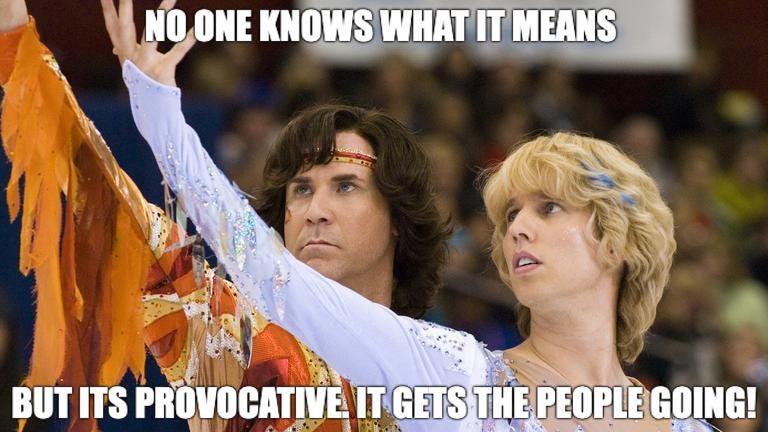
When Paul describes (Romans 14:11; Philippians 2:11) creation’s final acclamation of God’s majesty in the Age to Come as “grateful praise” or “joyous confession” he is also describing the moment in which all of creation is called into being. That act of praise at the end of days is nothing less than the creature’s original response to the call that, in the beginning of days, draws all things into being out of nothingness. It is the creature’s participation in God’s eternal return to himself within the divine life itself and within his exitus and reditus in creatures. All things are created in their last end, and spiritual creatures possessed of reason and freedom exist only to the degree that they fully assent to and delight in the end that summons them from the night of nothingness (again: “No one knows what it means, but it’s provocative. It gets the people going!”). Here, the disproportion and qualitative difference between the eternal and the temporal must be observed with absolute exactitude. The eternal reality of all things is, from the perspective of time, an end to be attained; but, were that end not eternally always so, no finite creature would exist. This is especially so for spiritual creatures, whose very existence as spirit can be nothing other than an insatiable intentionality toward the whole of divine being. The final cause of all things that come into being is the whole reality of the created, in its accomplished and so original plenitude. The spiritual life is nothing more than a constant labor to remember our last end by looking forward to our first beginning. The final “joyous confession” of creation is nothing less than its eternal assent to be, its original answer to God’s call, its joyous acceptance of the gift of being, and therefore its full moral and spiritual commitment to existence as a wholly contingent manifestation of the divine life in its absoluteness.
Hearty congratulations!
Perfect!