

He may not write music, but he generally writes books. He generally keeps, when writing, within the sphere of concepts and words. Society supplies ideas ready to hand, worked out by his predecessors and stored up in the language, ideas which he combines in a new way, after himself reshaping them to a certain extent so as to make them fit into his combination. This method will always produce some more or less satisfactory result, but still a result, and in a limited space of time. And the work produced may be original and vigorous; in many cases human thought will be enriched by it. Yet this will be but an increase of that year’s income; social intelligence will continue to live on the same capital, the same stock.
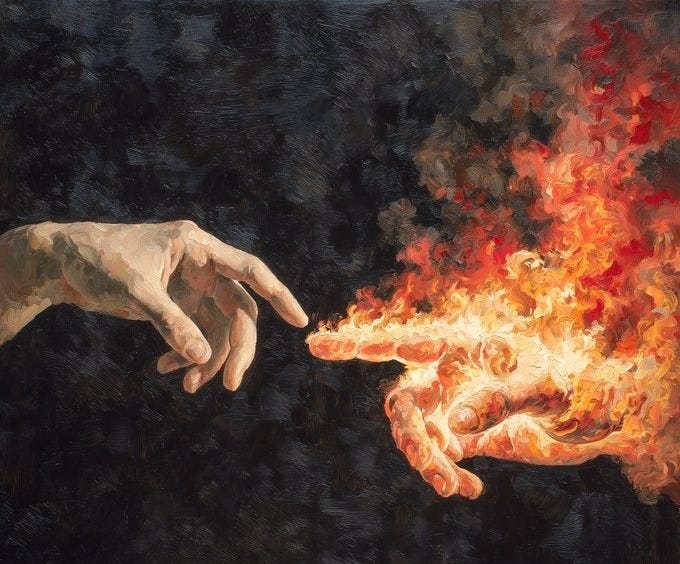
Now there is another method of composition, more ambitious, less certain, which cannot tell when it will succeed or even if it will succeed at all. It consists in working back from the intellectual and social plane to a point in the soul from which there springs an imperative demand for creation. The soul within which this demand dwells may indeed have felt it fully only once in its lifetime, but it is always there, a unique emotion, an impulse, an impetus received from the very depths of things. To obey it completely would be to pass beyond language itself, beyond communication, beyond writing. And yet the writer attempts to realize this unrealizable thing. He is driven to strain the words, to do violence to speech. And, even so, success can never be sure; the writer wonders at every step if it will be granted to him to go on to the end; he thanks his luck for every partial success, just as a punster might thank the words he comes across for lending themselves to his fun. But if he does succeed, he will have enriched humanity with a thought that can take on a fresh aspect for each generation, with a capital yielding ever-renewed dividends, and not just with a sum down to be spent at once.
These are the two methods of literary composition. They may not, indeed, utterly exclude each other, yet they are radically different. The second method is what the philosopher must have in mind in order to conceive new works with the creative love wherein the mystic sees the very essence of God.